
By Omkar Gore · · 4 min read
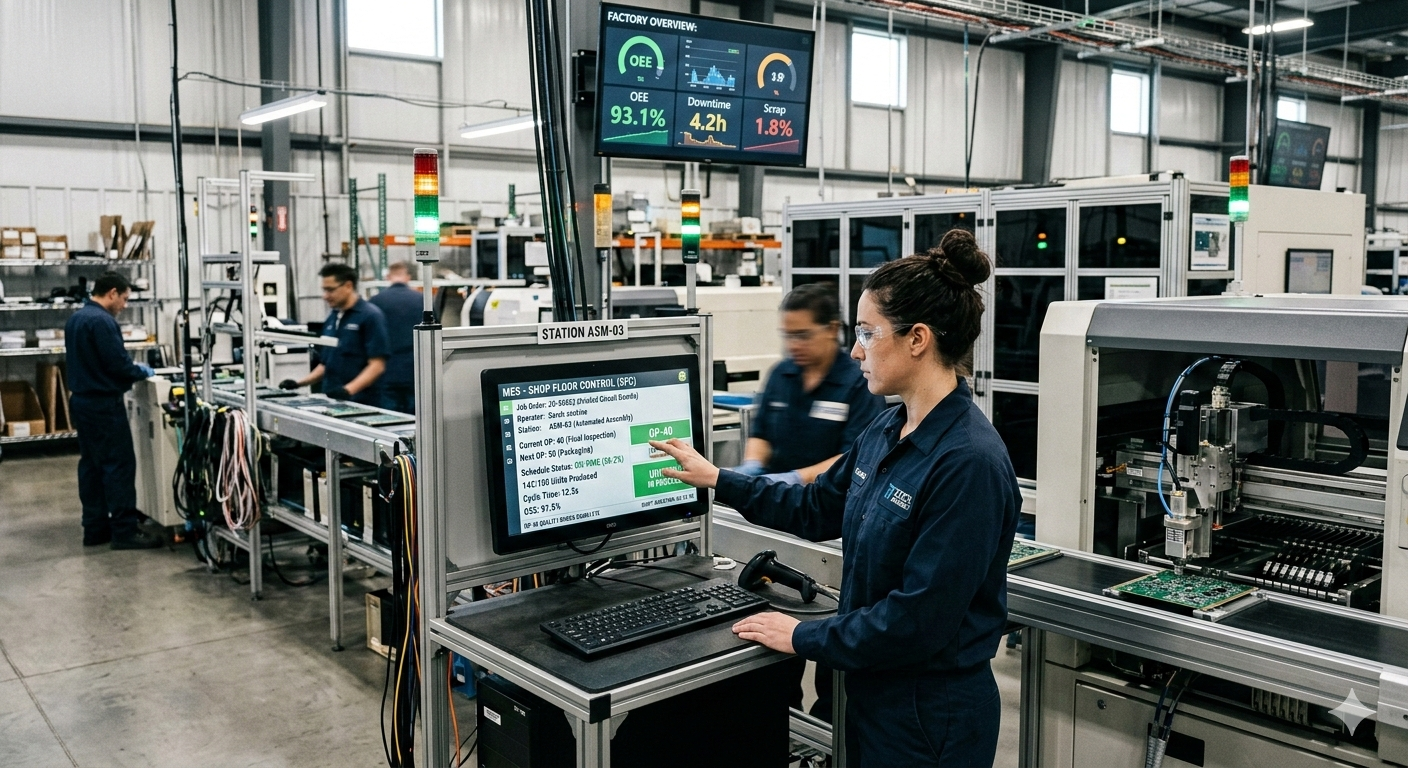
Learn the differences between Manufacturing Execution Systems and Enterprise Resource Planning systems and how they support manufacturing businesses.
An ERP manages the business: orders, purchasing, inventory, finance and planning. An MES (Manufacturing Execution System) manages production as it happens: which job is on which machine, who is running it, what was produced and whether it passed quality checks.
Plants often buy one and expect it to do the job of both. This article explains the difference and gives a simple way to decide.
Background and industry context
ERP works at the level of days and weeks. It plans what to buy, what to make and what to invoice.
MES works at the level of minutes and shifts. It records what is actually running on the floor right now.
Challenges to consider
ERP knows a work order exists and what material it needs. It usually does not know that a machine stopped for forty minutes, that a tool was changed or that a batch was reworked.
That gap is normally filled with paper, spreadsheets and phone calls, so the data arrives a day later, if at all.
A practical approach
If your problem is we do not know what to buy or when to produce, start with ERP. If it is we do not know what happened on the floor today, start with MES.
Many plants need both. The aim is to connect them so planned and actual numbers can be compared for each order.
Lessons learned and practical insights
- Name the three questions about production you cannot answer today, then choose the system that answers them
- Pilot on one line before rolling out
- Keep reasons for stoppages as a short list so operators can record quickly