
By Geetanjali Sase · · 4 min read
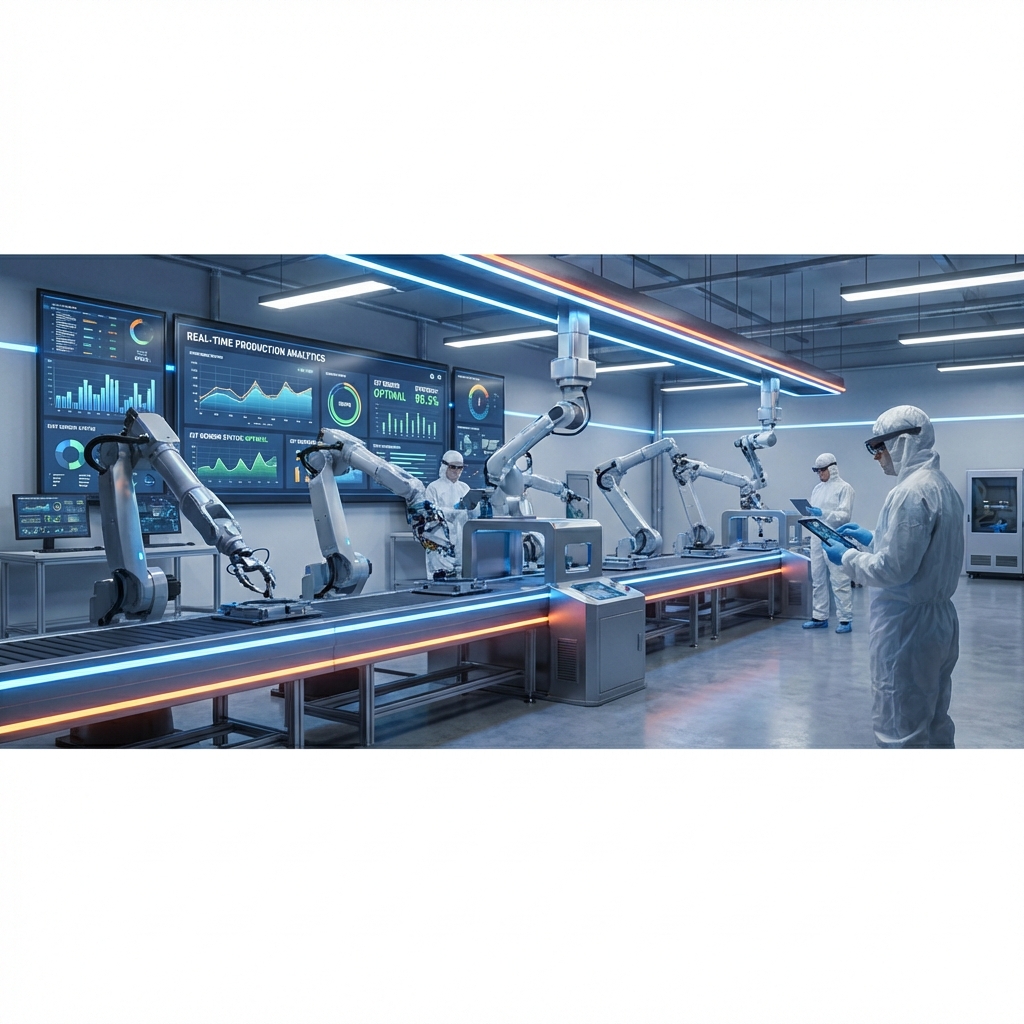
Discover how digital solutions, automation, and data-driven processes can improve manufacturing operations.
Manufacturing technology is changing how businesses plan work, monitor production and respond to quality or equipment issues. Digital records, automation and data analysis can give teams better visibility, but only when they address a real operational need.
Transformation is not one tool or a single installation. It is a deliberate process of improving workflows, connecting relevant information and helping people use it to make timely decisions.
Background and industry context
A connected operation may link business planning systems with shop-floor execution, quality checks, maintenance records and reports. The goal is to reduce information gaps between the plan and the work taking place.
Automation can reduce repetitive manual steps, while analytics can help teams identify patterns in production records. Neither removes the need for sound process definitions, accurate inputs and human oversight.
Challenges to consider
Information may be fragmented across paper records, spreadsheets, machines and separate applications. Inconsistent identifiers or delayed updates make it difficult to compare planned and actual work.
Automation introduced before a process is understood can make exceptions harder to manage. Poor data quality can also produce misleading dashboards or alerts.
Teams may face integration, security, training and maintenance requirements. A solution must fit production realities and have clear ownership after deployment.
A practical approach
Set a clear objective, such as improving visibility of job status, reducing repeated entry or making inspection records easier to trace. Document the current process and agree how the team will evaluate progress.
Review existing software, equipment and data before adding technology. Define which system owns each record and what information needs to move between systems.
Pilot a bounded workflow with operators, supervisors and relevant support teams. Validate normal and exceptional cases, provide training and use feedback to guide any further phases.
Technology considerations
Manufacturing transformation can involve ERP, MES, quality and maintenance applications, automation equipment and reporting tools. The right combination depends on the operation and should be selected with clear requirements and integration responsibilities.
Key features and implementation details
- Shared operational records and consistent identifiers
- Timely visibility into relevant production events
- Structured quality and maintenance workflows
- Reports tied to clearly defined measures
Lessons learned and practical insights
- Technology should support an agreed process objective
- Connected data is valuable only when definitions are consistent
- Automation does not replace operational ownership
- Training and support are part of implementation, not afterthoughts
Related products and services
Manufacturing Execution System →|Software solutions →
Discuss Manufacturing Technology